
Heating and cooling correspond to roughly half of the final energy use in EU, regardless of the country. At the same time, only 23 % of this demand is satisfied by renewable supply. Both the EU Green Deal and the Fit-for-55 package indicate that decarbonizing the heating and cooling sector is crucial in meeting the emission reduction targets. Moreover, the Russian offensive war on Ukraine and the resulting energy sector turmoil in Europe has highlighted the need to accelerate the clean energy transition with emphasis on solutions that increase energy security, most notably reducing the use of natural gas in production of heat. The main solutions for tackling this challenge are energy efficiency (EE), heat pumps (HPs) and district heating (DH) based on renewable and waste heat sources. While the related solutions are reasonably mature, their application is hindered by the existing buildings and infrastructure – but also practices and current business models. The heat distribution systems within buildings are key enablers within the heating sector; this includes their design, operation as well as their temperature levels.
This project aims to 1) identify, 2) assess and 3) demonstrate the solutions for refurbishing buildings to accelerate the decarbonization of the heating sector while increasing energy system flexibility. The focus is on heat supply through next generation, low-temperature DH, but the project outcomes will similarly improve the efficiency of virtually any heat supply, e.g., individual ground source HPs. Furthermore, while the emphasis is on existing building stock, the solutions are fully applicable to new buildings. The project combines three very different operational environments and perspectives for solving the same challenge as shown in Figure 1.
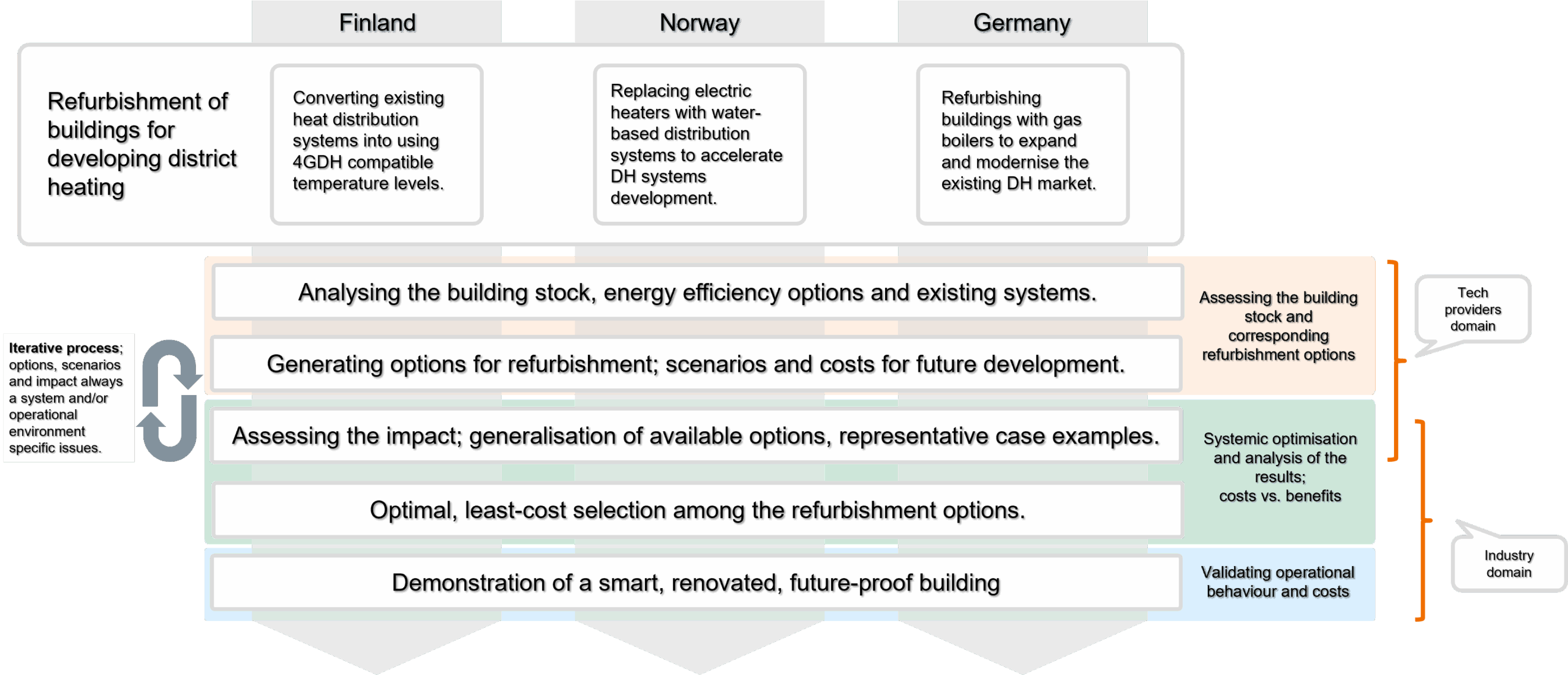
Figure 1. The scope, objectives, and main phases identify (red), assess (green) and demonstrate (blue).